

Previously unknown musical pieces by Johann Sebastian Bach have been unveiled and performed in the European nation for the premiere performance in over three centuries.
The country's Culture Minister Wolfram Weimer labeled the discovery of the pair of works a "important event for the musical community".
They originally drew interest of Peter Wollny in 1992 when he was documenting the composer's papers at the Royal Library of Belgium.
The organ works - the D minor Chaconne and G minor composition - were dating unknown and without attribution. The researcher spent the subsequent thirty years working to verify the origin of the pieces.
Historic Performance
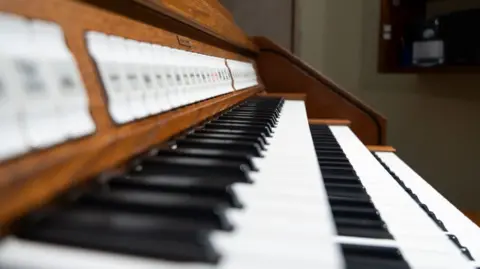
They were played at the Thomas Church in Leipzig, where the composer is interred and where he was employed as a cantor for 27 years.
The pair of works were performed by organist from the Netherlands the musical performer, who said he was privileged to be able to perform them for the initial performance in three hundred twenty years.
He said the works were "of a very high quality" and would be "an important addition for contemporary organ players, as they are also suitable for reduced-scale organs".
Historical Significance
They are believed to have been created at the beginning of Bach's professional life, when he was working as an organ teacher in the municipality of the German town in central Germany.
Mr Wollny, who is now the head of the Bach Archive in the municipality, said they displayed several characteristics unique to the composer.
"Stylistically, the compositions also feature elements that can be found in Bach's compositions from this period, but not in those of different artists," he said.
They are believed to have been written down in 1705 by Bach's apprentice, the historical figure.
At a unveiling of the works, the researcher said he was "almost completely confident that the composer had written the pair of works" and they have now been added into the official catalogue of his compositions.
- European Culture
- Germany
- Orchestral works
- Music


